Speeches & Poetry

Speeches & Poetry

Iconic Speeches (text, audio, video)

Resilience

Pokhran-II National
Address

Valor

Kargil War Victory
Speech

Diplomacy

UN General Assembly
Speech

Unity

Parliament Speech on
Democracy & National Unity

Pokhran-II: A Moment of National Pride – Address to the Nation (1998)

Kargil Victory Tribute: Honouring India’s Brave Soldiers (1999)

Voice of India at the United Nations – Speech in Hindi at the UNGA

Democracy Above Politics – Historic Parliament Speech on National Unity

Collection of poems

Themes of His Writings

Love for India

Atal Bihari Vajpayee’s writings echo deep devotion to India—its culture, people, and spiritual heritage. His poetry reflects a patriotic heartbeat rooted in sacrifice, struggle, and national progress. He portrayed India not merely as a geographical landmass but as a living civilization with values of dignity, unity, and freedom. His words inspired generations to dream of a stronger, self-reliant nation built on integrity and democratic strength.

Humanity & Compassion

Compassion lay at the core of Vajpayee’s literary voice. His poems often highlighted the universal bond between individuals beyond differences of religion, language, or ideology. He celebrated humanity above politics, advocating peace, empathy, and coexistence. His writings remind us that true leadership is measured by kindness, emotional sensitivity, and care for the weakest members of society.

Courage, Hope & Resilience

Vajpayee’s poetry was shaped by courage during adversity and hope during uncertainty. He wrote about overcoming challenges with determination and faith, encouraging citizens to rise from failure with renewed strength. His verses reflect optimism in difficult times and resilience in the face of national and personal struggle. His writing continues to inspire, teaching that setbacks are temporary but courage is eternal.

Themes of His Writings

“Kaidi Kavirai Ki Kundaliyan”

Written during a period of imprisonment, this collection reflects Vajpayee’s fearless voice against injustice and authoritarianism. The poems blend satire, bold political commentary, and philosophical depth, revealing his unwavering commitment to democracy and civil liberty. The work stands as a testament to literary courage in turbulent times.

“Amar Balidan”

A poetic tribute to the sacrifices of freedom fighters and national heroes, “Amar Balidan” expresses pride, reverence, and emotional intensity. Through powerful imagery and heartfelt expression, Vajpayee honors those who laid down their lives for India’s independence. The work continues to inspire patriotic spirit and collective gratitude.

“Geet Naye Gata Hoon”

This collection celebrates hope, progress, and new possibilities for India. The poems express optimism for a transforming nation and encourage citizens to move forward with unity, dedication, and renewed spirit. Known for its lyrical beauty and philosophical tone, the collection remains one of his most quoted and influential literary works.


Scroll to Top

Pokhran-II National Address (1998)

Atal Bihari Vajpayee’s national address following the Pokhran-II nuclear tests stands among India’s most historic speeches, symbolizing courage, national security, and technological progress. Speaking with calm determination, he declared to the nation and the world that India had entered a new era of strategic strength—guided not by aggression, but by responsibility and peace. His words emphasized that India’s nuclear capability was intended for self-defense and global stability, not domination or conflict.
Key message: India would not bow to pressure or sanctions, and every challenge would be met with unity and dignity.
This speech profoundly boosted national morale, strengthened India’s strategic position globally, and remains a defining moment of resilient leadership.

Kargil War Victory Speech (1999)

After the successful conclusion of the Kargil War, Vajpayee delivered a deeply emotional speech honoring the bravery and sacrifice of Indian soldiers. His words celebrated the courage of the Indian Armed Forces and expressed the nation’s collective pride in their determination to protect the country’s integrity. He reminded citizens that India does not initiate aggression but is fully prepared to defend every inch of its land.
Key message: “Our victory is not just military—it’s a triumph of national spirit, unity, and sacrifice.”
The speech inspired millions, strengthened patriotism, and commemorated the lives lost with dignity and gratitude. It remains one of the most powerful tributes to Indian soldiers in modern history.

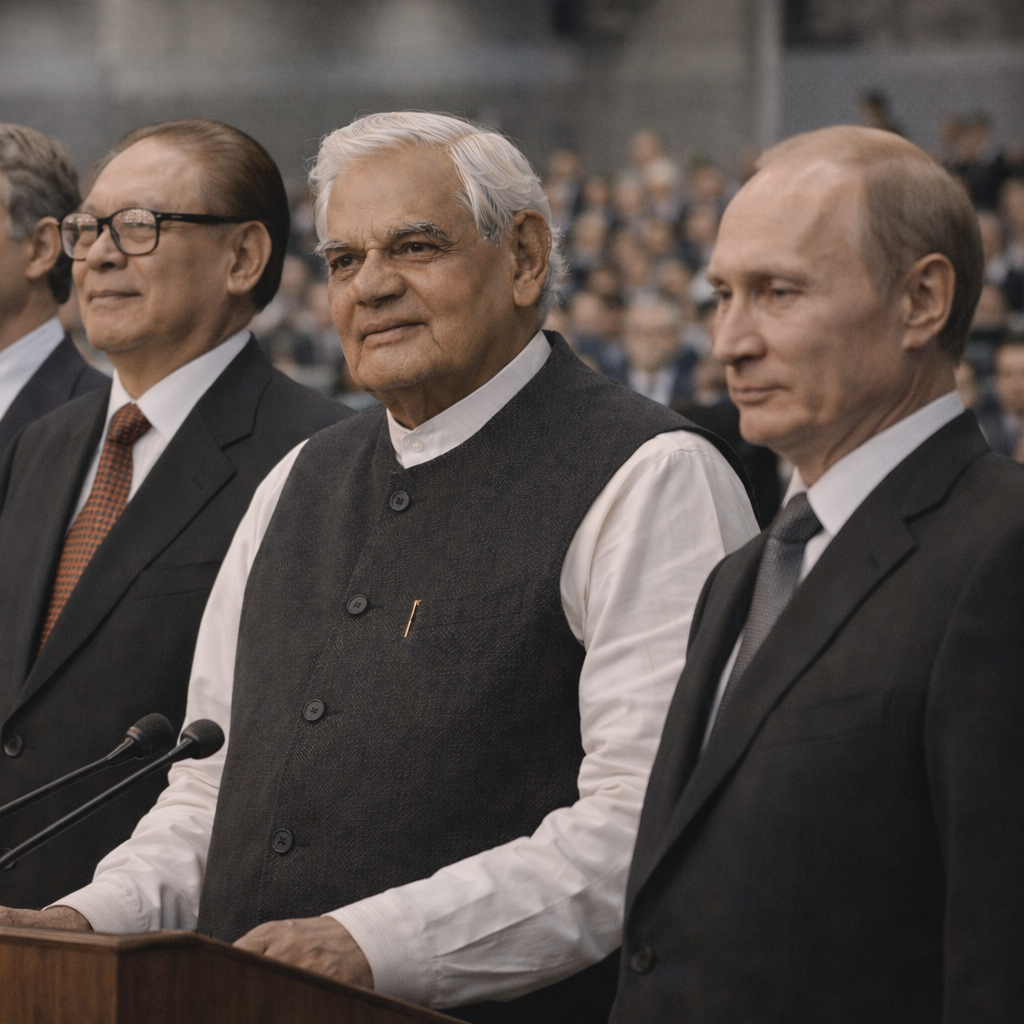
UN General Assembly Speech

Atal Bihari Vajpayee made history as the first Prime Minister to address the United Nations General Assembly in Hindi, reaffirming India’s cultural identity on the global stage. His speech promoted peace, global cooperation, economic development, and anti-terrorism measures. He advocated for a world where dialogue replaced conflict and where nations collaborated for collective progress rather than competition.
Key message: India stands for peace, fairness, and equality among all nations.
Through diplomacy and respectful leadership, his message strengthened India’s international stature and positioned the country as a responsible global voice, admired for balance and wisdom.

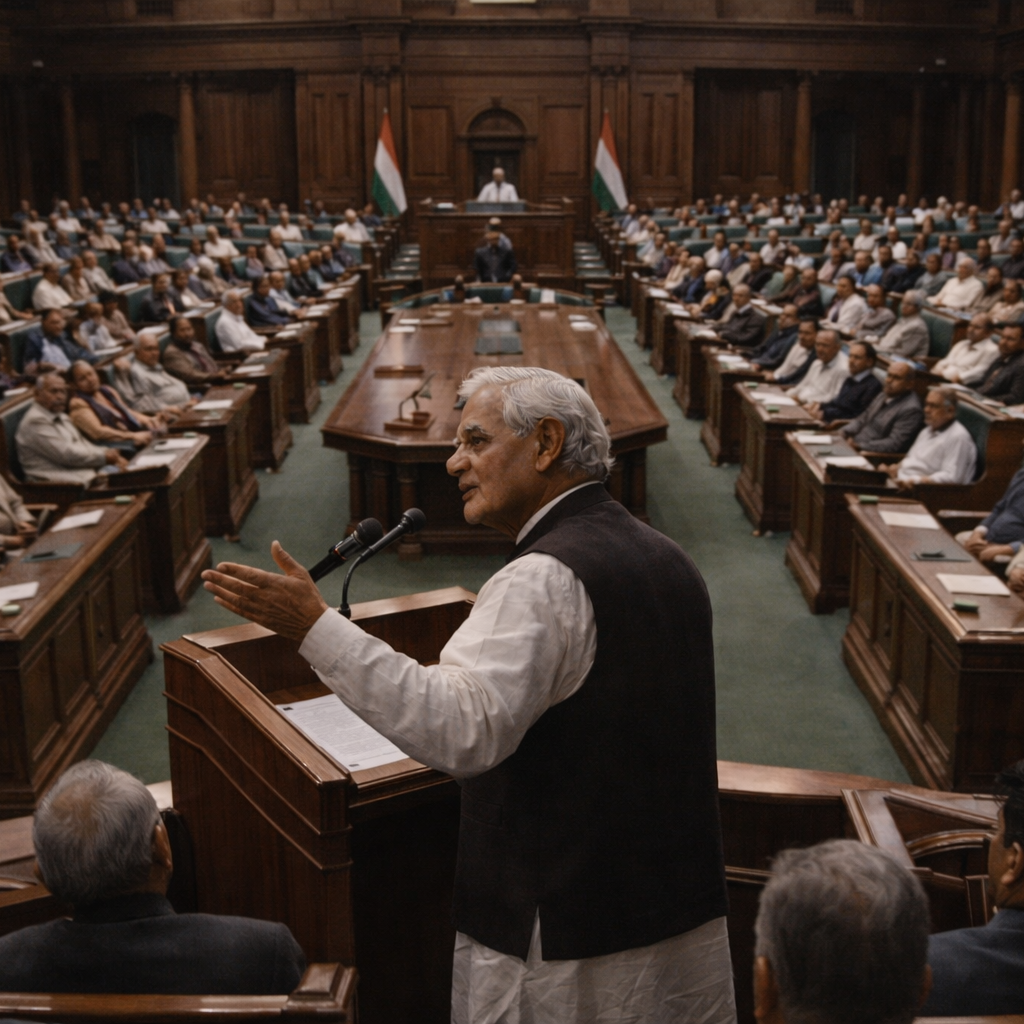
Parliament Speech on Democracy & National Harmony

In one of his most memorable parliamentary speeches, Vajpayee spoke passionately about preserving democracy, national unity, and political dignity. He emphasized that differences of opinion must never overshadow national interest and that governance should be rooted in dialogue, respect, and collective progress.
Key message: “Governments may come and go, but the country must remain united, and democracy must prevail.”
His speech set a benchmark for ethical politics and remains a guiding light for leaders seeking consensus-driven governance. It continues to resonate as a lesson in statesmanship, humility, and democratic maturity.